RARE TEA INTELLIGENCE
Track aged cakes, vintage lots, and rare Chinese tea arrivals
You already know a 2003 Menghai recipe from a 2005 reprint — what you do not have is time to refresh forty vendor pages and auction feeds every day. tea.dog is the cross-network search and alert service that does that watching for you, indexing vendor catalogues, auction sheets, and cellar reveals across the Teamotea constellation so that a 1998 Yiwu *Shēng Pǔ'ěr* (生普洱) does not slip past you while you sleep.

From the community
Recent discussions
- — 01
Counterfeit warning archive — named lots and vendors
A community-driven, evidence-based archive of counterfeit Chinese tea lots, named producers, and vendor reports. Collected warnings, photo evidence, and known fakes from the field. Cross-referenced with factory codes and auction histories. Updated as new reports come in.
- — 02
Phoenix old-bush dancong — alert protocol
When a genuine old-bush dancong lot surfaces, the window to acquire is measured in hours — not days. How collectors verify provenance, navigate broker chains, and avoid the majority of claims that collapse under scrutiny. Mei Yang draws on Phoenix Mountain fieldwork to outline a repeatable alert protocol.
- — 03
Dry-cellared finds — the Kunming and continental record
A thread for collectors and archives of dry-stored puerh. We share finds from Kunming, Ulaanbaatar, and the Siberian pause — Buryatia — with documented provenance, because wrapper aging tells half the story.
- — 04
Ethics of the rare-tea trade — what we don’t post
A frank look at the lots tea.dog quietly declines to circulate — unverifiable provenance, suspect village 'discoveries', and the laundering patterns we have learned to recognise across two decades in Hunan and Yunnan.
- — 05
Reading Hong Kong storage marks on vintage cakes
Liu Shenyang opens a thread on identifying classical Hong Kong storage through physical markers on vintage cakes — wrapper foxing patterns, neifei darkening, and compression slumping — what they reveal about warehouse conditions.
- — 06
How the alert system actually works
A working note on what tea.dog’s alerts actually catch, what they miss, and how to tune a watchlist so the signal you receive is the one you would have chased on foot anyway.
- — 07
Aged Liu Bao basket finds — the Guangxi corner
Aged Liù Bǎo (六堡) from Guǎngxī is turning up in its original bamboo baskets in Guangzhou and Hong Kong — but before you taste, read the basket. Amgalan Chin shares field notes on spotting true vintage through weave, date marks, and storage character.
- — 08
Pre-2000 pressings — authentication checklist
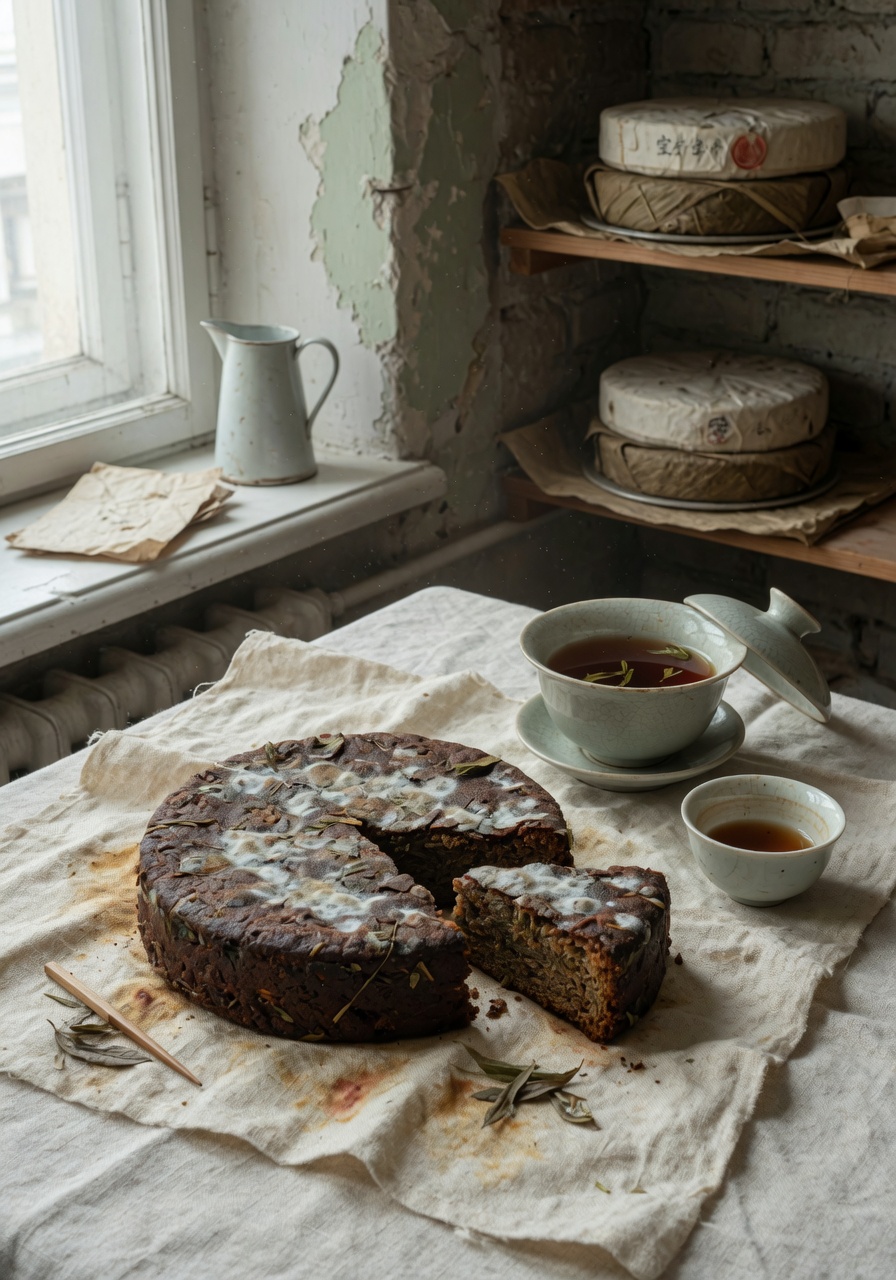
A field-hardened checklist for serious collectors assessing pre-2000 *Shēng Pǔ'ěr* (生普洱) pressings. From *nèi fēi* (内飞) positioning and wrapper paper oxidation to ink degradation patterns — the objective markers that separate genuine stored tea from opportunistic fabrications.
- — 09
When a price is too good — under-priced vs suspect
Collectors often face a puzzle: is that improbably low price a once-in-a-lifetime find, or a warning that deserves a hard pass? Amgalan Chin draws on field experience across Yunnan and trans‑Siberian tea routes to separate the bargains from the traps.
- — 10
Vintage pu’er — the condition language we use
Before you chase a wrapper photo on tea.dog, learn the condition vocabulary we use in the alerts — wrapper, neifei, compression, storage trail — so the description tells you whether a cake is worth the call.
Groups
3 active cohorts
Aged-cake watch club — twelve months
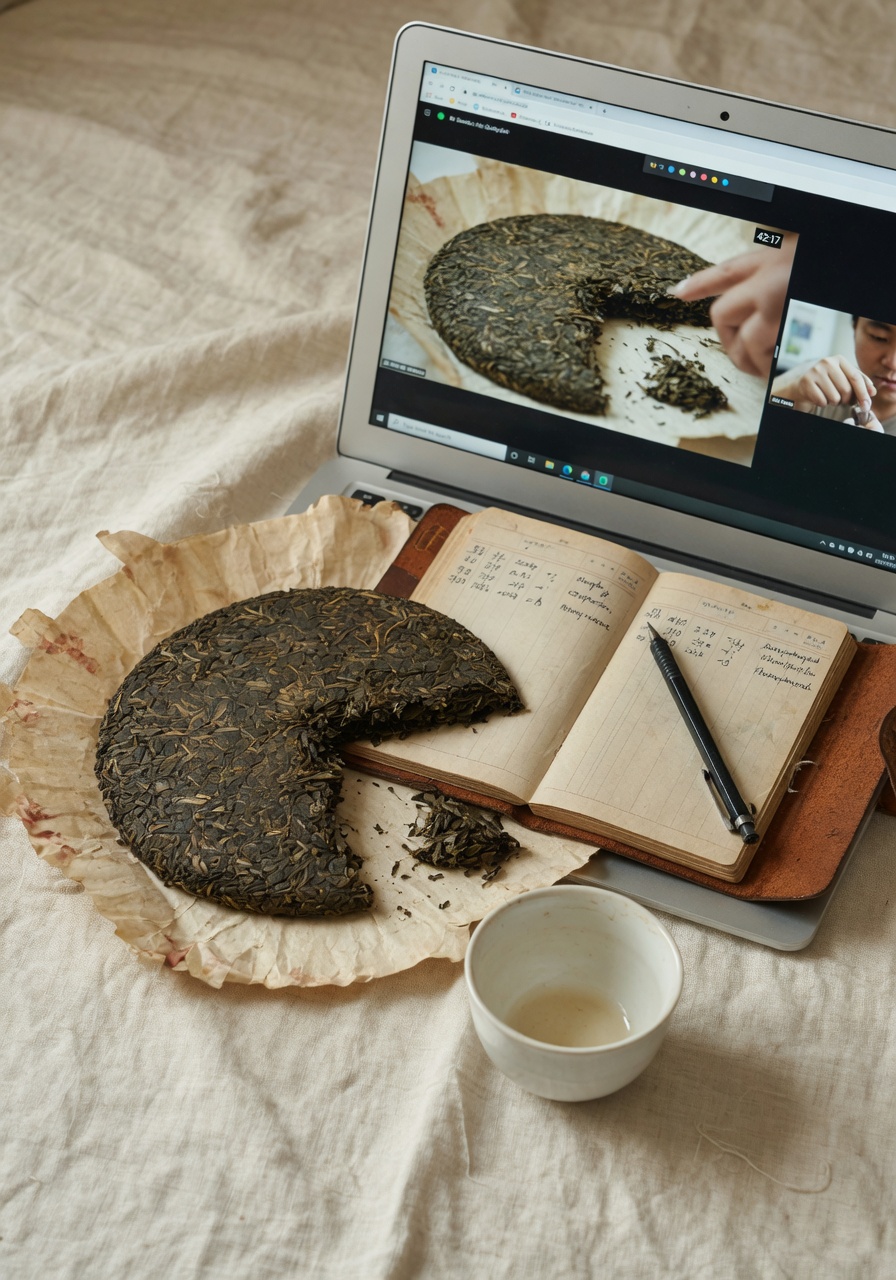
One vintage cake per month, sampled in synchronised online sessions across the membership. A 10g sample arrives by post a fortnight before each tasting, with provenance notes from Amgalan Chin.
Vintage authentication cohort — six months
A deep, cumulative study of aged pu’er teas with Amgalan Chin. Over twenty‑six weeks, you will learn to read wrappers as field notes, recognise the chemical footprint of early‑2000s inks, and interpret *nèifēi* (内飞) placement with forensic precision. Application‑only — twelve seats.
Storage comparison cohort — quarterly
A quarterly cohort comparing the same raw puerh cake across three storage climates. Led by tea master Liu Shenyang, each session trains sensory calibration — from Kunming dry to Hong Kong traditional storage — building your tasting database at tea.dog.